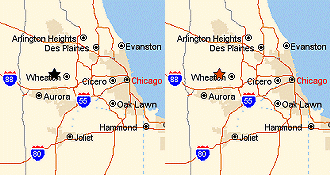
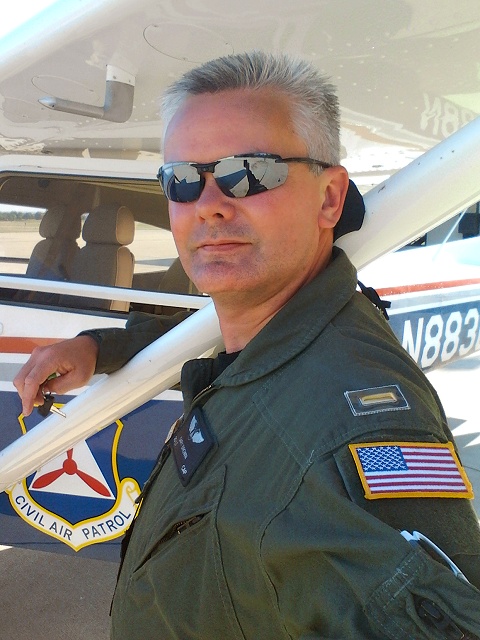
 Hi there! My name is Gary Brown (NO9G). I live in a little town located in the Western suburbs of downtown Chicago called West Chicago, Illinois.
Among a wide variety of other interests, I'm a licensed Amateur Radio (or Ham Radio) Operator by the Federal Communications Commission (FCC). My callsign is NO9G -- a Extra class license. I received my operating license in January 1991 (Technician-Plus) and have been enjoying this wonderful hobby ever since. I upgraded my license to General Class in December 2000 and to Extra Class (the highest rating) again in January 2012.
But, if you're not already a Ham Operator (or know one), you're probably wondering...
 Ham radio is one of the most exciting, friendly, useful, educational and high-tech hobbies. Hams include a diverse group of people around the world -- engineers, scientists, doctors, astronauts, students, teachers, boaters, pilots, retirees and even famous celebrities. You just never know who you're going to talk to "on-the-air" next.
Ham Radio is a federally licensed and administrated radio service. Operators study for and take exams to acquire their operating licenses (and callsigns). Anyone, regardless of age, gender or physical ability can get a license. Once licensed, Ham Radio Operators use their radio stations (including two-way radios, computers, antennas, satellites and other equipment) to make contacts around the world from their homes, cars, boats and planes. With Ham Radio you can:
- Make Contacts Around the Globe
- Use Small Handheld Radios for Local Communications
- Make Free & Unlimited Wireless Phone Calls
- Use Your Computer for Wireless Connectivity
- Design or Construct Radios, Antennas & Electronics
|
- Provide Communications for Public Services
- Contact the Space Shuttle Astronauts
- Make Contacts Via Satellites
- Bounce Signals Off The Moon for Contacts
- And So Much More
|
 But there's also a serious side to this hobby. Amatuer Radio was established to provide citizens with a means to hone their radio operating skills for times of emergency. You see, Ham Radio Operators are often called upon in times of disaster. Hams can handle emergency communications for police, fire, government and other public service organizations during hurricanes, tornadoes, floods, earthquakes, fires, accidents, search and rescue, and other emergencies. With Ham Radio, you can provide a valuable public service.
Now, if you have an interest in Ham Radio, I highly recommend that you at least investigate it a little further. Studying for and acquiring your license is not difficult at all. Study manuals for the entry level license (which is a 30 question test) are available at Radio Shack. Getting my Amateur Radio license was one of the best things I ever did for myself. A great place to learn more about Ham Radio is the American Radio Relay League (ARRL). Additinoally, I welcome you to contact me with any questions.
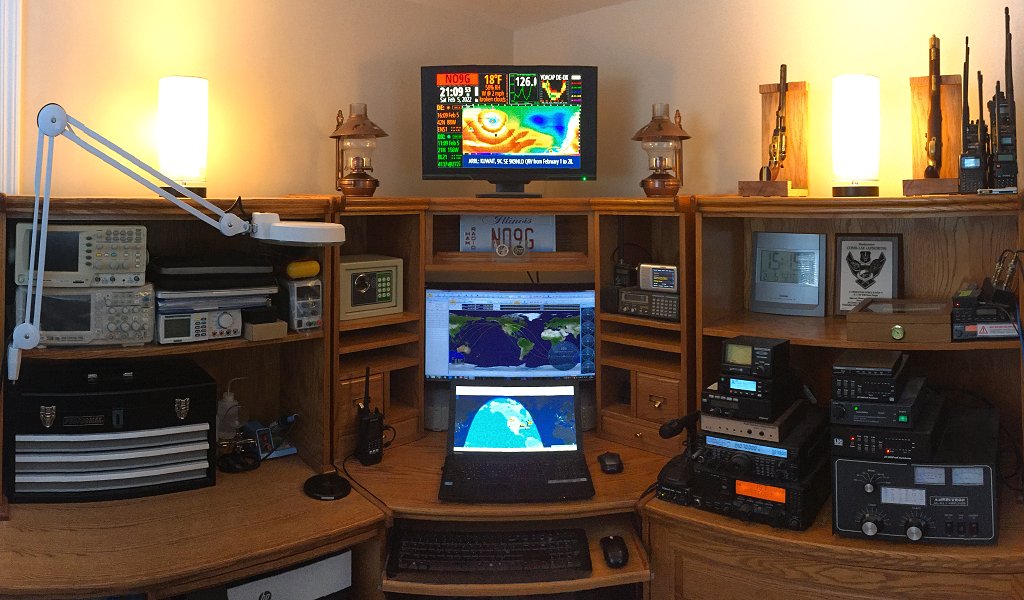
Ham Radio need not be expensive. My station and equipment is quite "humble" by comparison, (albiet, I've had quite a variety of equipment over the years) but it proves sufficient for my purposes. My station equipment includes:
Yaesu FT-847 Earthstation HF/VHF/UHF All-Mode Transceiver
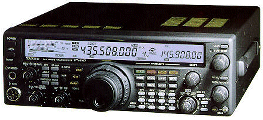 This addition was a little treat for myself after upgrading my license. I'm very impressed with its performance on *ALL* bands (in all modes). I've successfully interfaced it with the West Mountain Radio RigBlaster Plus for digital modes on HF, VHF and UHF -- including CW, PSK31, Packet, APRS and Slow Scan Television. I've also used it for some limited satellite phone and data connectivity on my dualband VHF/UHF vertical antenna; but more for HF communications on the antennas below...
 |
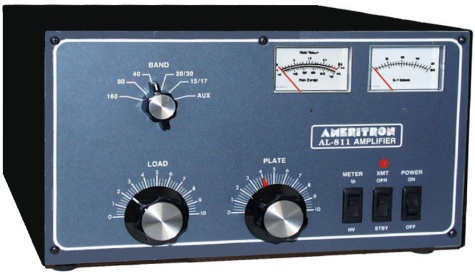
Ameritron AL-811 Amplifier
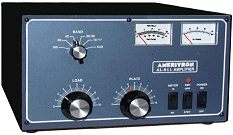 Picked this 600-watt HF amplifier up on Craigslist from a local Ham Radio Operator for just $450, in mint condition, and it has really helped me scored some DX contacts that I would have previously struggled to make. They say that the first 600 watts of power yeilds nearly 2 full S-units over a barefoot rig. Going from 600 watts to the full legal limit (1500 Watts) gives you less than one S-unit increase. I just couldn't justify the additional expense... and my experience with this amplifier has confirmed that this was a great decision.
 |
Hustler 6BTV 6-Band HF Vertical Antenna
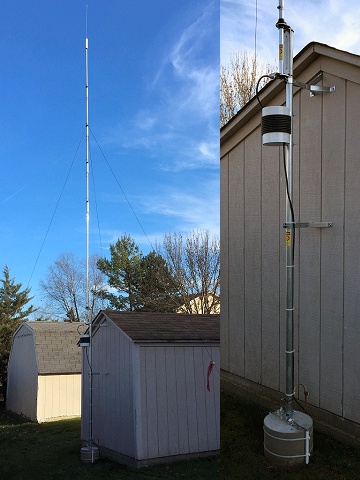 This is now my primary HF antenna. It covers the 80, 40, 30, 20, 15, and 10 meter bands. I'm satisfied with the performance and small footprint. You can see all the antenna specifications by clicking here.
NOTE: I did have some EXTREME winds break the lower antena mast -- even with guy wires -- so I purchased the ruggedized lower tube (available here) and it remedied the issue... it has now survived 5+ years of some severe Chicagoland Spring and Winter winds. GET IT!
This is now my primary HF antenna. It covers the 80, 40, 30, 20, 15, and 10 meter bands. I'm satisfied with the performance and small footprint. You can see all the antenna specifications by clicking here.
NOTE: I did have some EXTREME winds break the lower antena mast -- even with guy wires -- so I purchased the ruggedized lower tube (available here) and it remedied the issue... it has now survived 5+ years of some severe Chicagoland Spring and Winter winds. GET IT! |
Icom IC-7100 HF\VHF\UHF All-Mode\D-STAR Mobile Transceiver
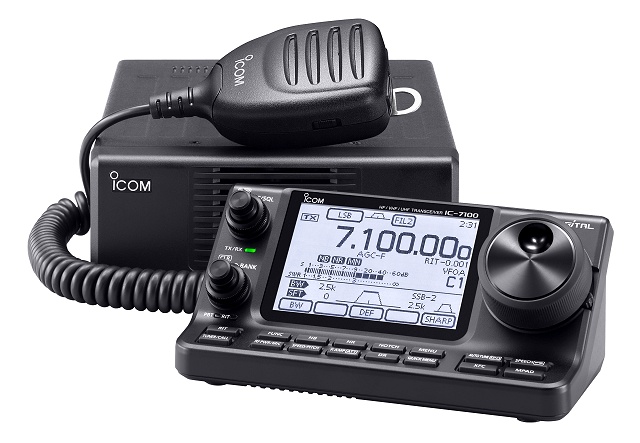 Added this radio to my new 2015 Jeep Wrangler Unlimited in November 2014 -- along with a new Little Tarheel II screw-drive, mobile HF antenna on the back of the Jeep -- and I'm *VERY* pleased with performance of both. I'll report more about this setup as I spend more time with it; but so far I'm having no problems working any stations I hear. The biggest surprise to me about this transceiver is that it has an internal soundcard... so I may now add a laptop to my Jeep to work some digital modes while mobile... yeah... that sounds safe. ;-) Hope to catch you on the air!
 |
Icom IC-M710 HF Transceiver
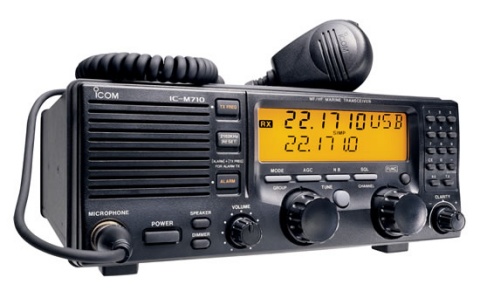 This is my primary HF transceiver for CAP operations... but it's also a back-up Ham Radio transceiver when needed. It drives 150 Watts PEP into a LDG AT-100ProII Autotuner and MyAntenas End-fed wire antenna (that loads up nicely on all the bands down to ~3 MHz). It performs well... albeit very utilitarian with no frills. It's a VERY basic analog transceiver originally designed for marine HF activities.
 |
Yaesu FT-897 Portable HF/VHF/UHF All-Mode Transceiver
 This is my newest addition -- to aid with my MARS, Mobile/Portable and Emergency HF Communications Operations -- and will be an upgrae to the Yaesu FT-817 QRP transceiver I had before. I'll report more on this radio as I gain experience with it.
 |
OPEK HVT-600 Mobile/Portable HF Vertical Antenna
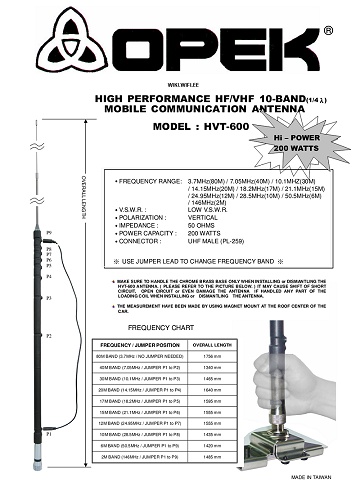 I just ordered this antenna on EBAY.COM for $75 (delivered). I ordered it for portable MARS and Emergency HF communications; but also for mobile HF fun. So, far, in the first week of using it in my truck, I've scored dozens of phone/digital QRP contacts (at just 5-watts) and received compliments on my mobile QRP signals (53 through 59) across the United States. I'll report more on this antenna as I get more experience and use it with my new FT-897.
 |
TYT MD-9600 Dualband DMR Transceiver
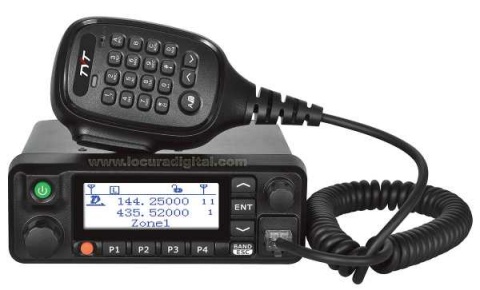 This is my primary analog and digital base VHF and UHF transceiver. It performs well and I welcome you to contact me directly on DMR.
 |
Yaesu VX-8GR (2m/70cm) Handheld FM Transceiver
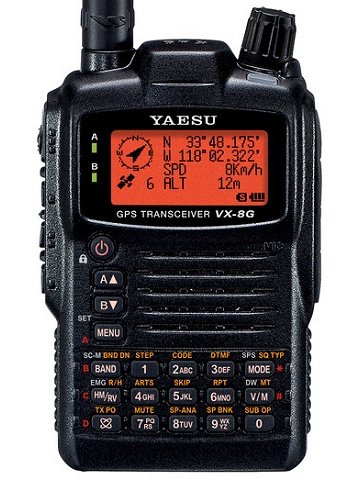 This is my latest addition to my handheld transceier collection. It's an self-contained FM\APRS\Data VHF\UHF Transceiver that I purchased primarily for tracking my aircraft while flying. You can usually track my aircraft at http://aprs.fi/no9g-11
 |
Motorola Astro Saber III VHF FM Transceiver
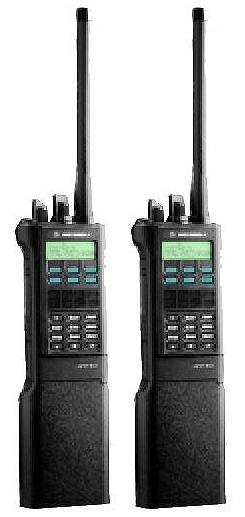 I picked two of these up -- primarily for use in CAP; but also to play with APCO-25 (P25) digital modes and for their durability for my severe weather spotting activities -- very inexpensively on eBay and Craigslist. Great durable and powerful (7+ Watt) transcivers capable of encrypted P25. My only complaint is that their transmit audio is a but muted/muffled due to the waterproof cabinet. But, never the less, I travel everywhere with one because of its extreme utility for both Ham, MARS & CAP missions!
 |
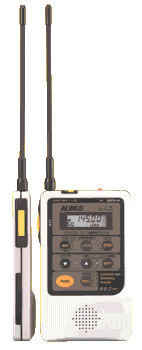
Alinco DJ-C5T dualband (2m/70cm) "Credit Card" Handheld FM Transceiver
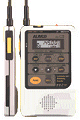 I just added this radio to the collection in 2004. WOW! What a toy! It's literally the size of a credit card (see the pictures) and I now carry with me just about everywhere in my shirt pocket. And, while it's only 350mw of RF output power, it does get into the local repeaters, has a great receiver and is perfect for everyday usage (especially for crossbanding or Echolink at home). RX and TX: 118.0 - 179 and 380 - 474 MHz. Everywhere I go, people (most who don't even know what it is and assume it's a cellphone) comment that they "love it". It's definitely right down my alley -- Dick Tracy like -- carrying this awesome (and admittedly cute) multipurpose transceiver, scanner and all around cool toy in my shirt pocket!
 |
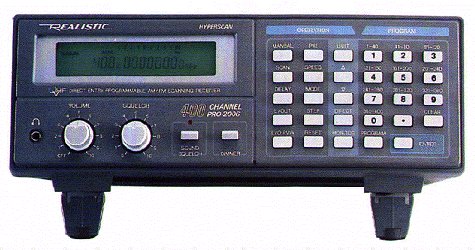
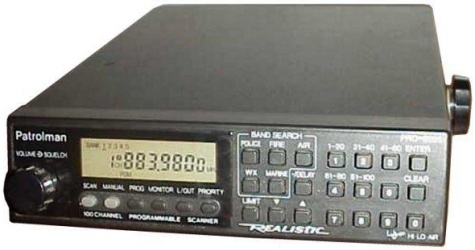
Realistic Pro-2005 Programmable AM/FM Scanner
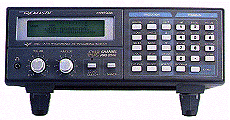 This receiver has been the mainstay of my shack for many years now. The 2005 (and 2006 pictured here) are nearly identical radios and are probably some of the most popular scanners out there. It features: wide frequency coverage (25~520, 760~1300 MHz), 400 programmable memories, AM/Narrow-FM/Wide-FM modes, delay, lock-out, 10-memory groups (40 channels each), sound squelch (skips quiet carriers). This scanner is incredibly sensative.
 |
I work at home and almost always have a radio and/or scanner going. So, if you want to reach me, you're best bet is to first try calling me direct on DMR and then on the local DuPage County and Kane County VHF and UHF repeaters. I'm also active on some of the newer digital HF modes like Winlink and VaraC... so you can try me on those too.
The frames below contain webpages I created to show current band\propagation conditions and some of the Slow Scan Television (SSTV) images I'm receiving (if my receiver is on that mode at the time)...
I run APRS GPS Tracking in my vehicle (as NO9G) and sometimes in my aircraft (as NO9G-11); you can track me at this link.
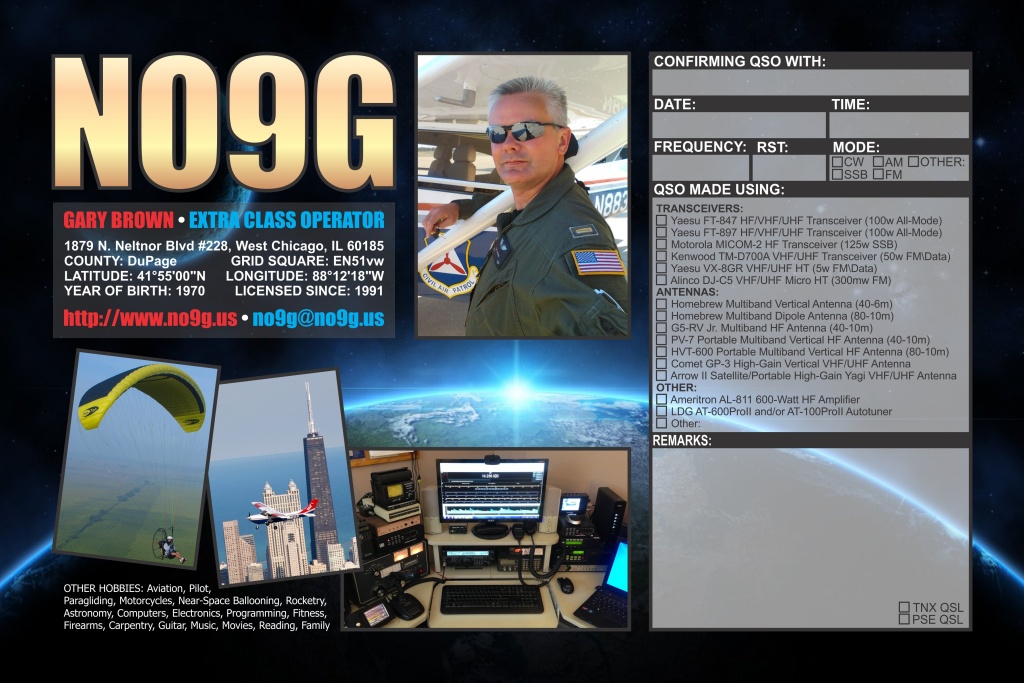
If you're not familiar with QSL Cards, they are merely postcards that Ham Radio Operators exchange with one another to confirm contacts with one another. (QSL is a radio code commonly used for confirmation or acknowledgement.) A QSL Card will contain the callsign, name, location, station information and sometimes pictures of the operator and will detail the date, time, frequency, mode, RST (readability, signal strength and tone) and other comments regarding the QSO (another radio code for contact or conversation). Many Hams collect (and proudly display) the QSL Cards that they receive from other Hams around the world.
Again, you need not spend much money on your QSL Cards. I created my own QSL Card by designing it with Corel Draw and Paint Shop Pro and have them printed on semi-gloss photo stock at Walmart. The key to this solution is using a permanent marker to fill out the card on photo paper. The result is a very professional looking QSL card.
- Aviation -- I'm a private pilot flying a Cessna 152, Cessna 172 and Piper Arrow
- Powerd Paragliding -- I'm just crazy enough to fly a paraglider [parachute] with a engine/propeller strapped to my back (it's more fun than *ANY* other aircraft I've piloted)
- United States Air Force Auxiliary (Civil Air Patrol) -- I volunteer as a pilot and operations officer for emergency services, search & rescue, aerospace education and mentoring cadets
- Rocketry I mostly enjoy making (or repacking) my own solid rocket propellants; It really *IS* rocket science
- Amateur Astronomy -- I like imaging deep space object like galaxies, nebuleas and planets
- Motorcycles -- I currently drive a Kawasaki 500EX Sportbike but want to buy a Honda CBR-600fi
- Guitar & Synthesizer -- I've really enjoy strumming out tunes on the guitar
- Computers & Electronics -- I love gadgets, computers and designing my own custom microprocessor controlled electronics (it also earns my living)
- Marine Aquariums -- Keeps me connected with my Florida roots
 Just a quick note, while you're reading this page, that I am also a Boy Scout Radio Merit Badge Counselor (for the Three Fires Council here in Chicagoland) and I can provide instruction\orientation on this (and other) Merit Badges for Boy Scouts. Just a quick note, while you're reading this page, that I am also a Boy Scout Radio Merit Badge Counselor (for the Three Fires Council here in Chicagoland) and I can provide instruction\orientation on this (and other) Merit Badges for Boy Scouts.
If you're a Scout Leader, member or parent of a scout interested in getting help with these Merit Badges, you can learn more on my personal website at http://gary.thebrownhouse.org and/or I welcome you to e-mail me at gary@thebrownhouse.org to start the discussion/planning.
If you have any comments or questions about Ham Radio (or anything on this web page for that matter), I welcome you to contact me using any of the following:
|